Thought Leadership
Practical guides, comparison pages, and field notes for leaders trying to understand what is real in agentic AI.
AI implementation studio
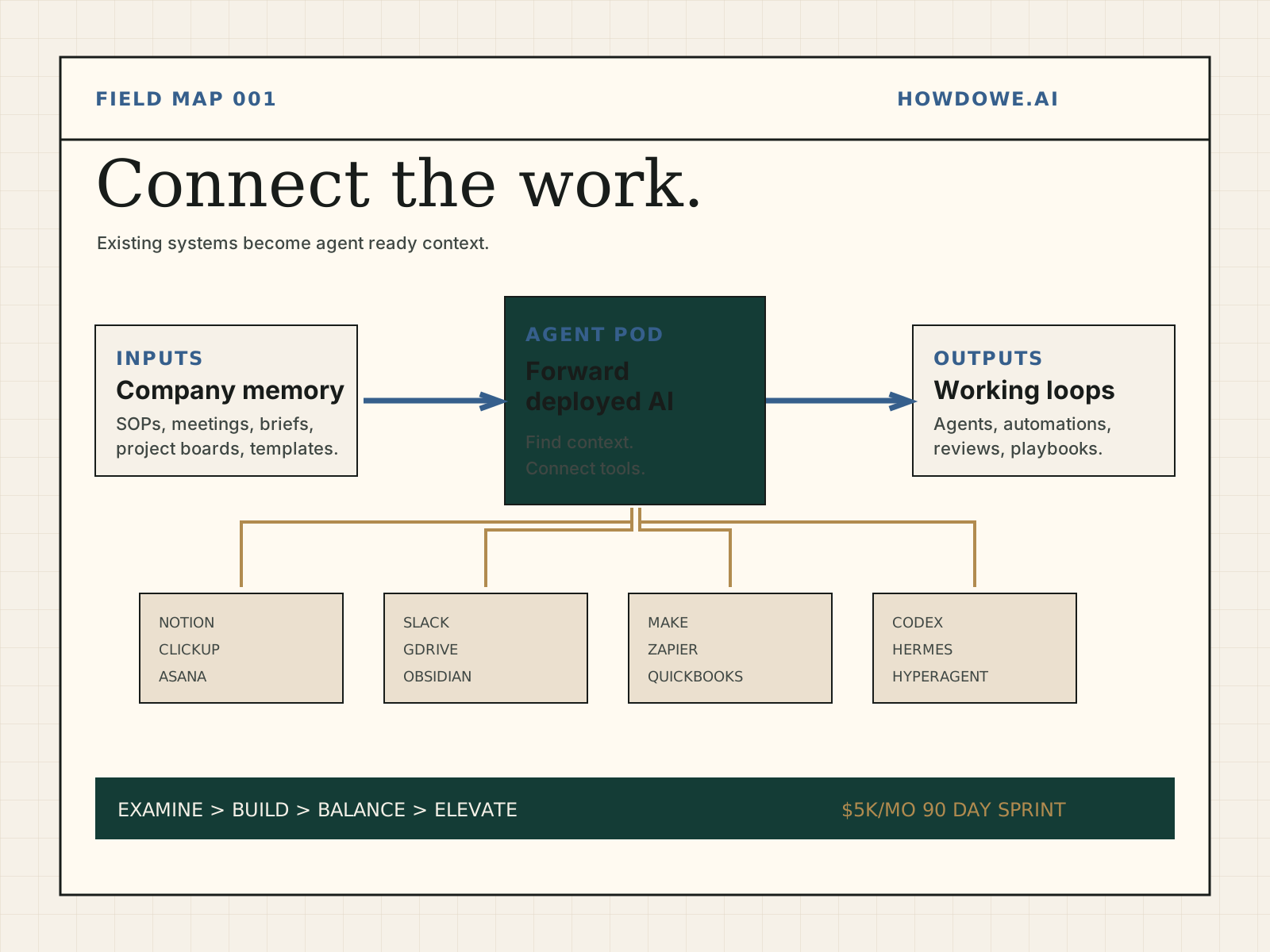
We connect the work your team already knows how to do. Existing tools, playbooks, meeting notes, templates, automations, and agents become one operating system.
The ICP
The best first customers are not blank slate AI tourists. They are teams with real operating memory: Notion pages, ClickUp tasks, Asana projects, Slack threads, Google Drive folders, Fireflies notes, SOPs, templates, spreadsheets, automations, and tribal knowledge.
The studio model
HowDoWe.AI is part field guide, part product lab, part implementation partner. The point is not to sound smart about agents. The point is to keep building proof.
Practical guides, comparison pages, and field notes for leaders trying to understand what is real in agentic AI.
Public products and internal experiments that show the studio using AI to build, test, ship, and learn in the open.
Rob-led forward deployed AI pods that connect tools, context, workflows, automations, and agents inside real companies.
Primary offer
A 90 day implementation run for companies that have the raw material already. We map the operating context, connect the systems, build the first useful agents, and leave a rhythm your team can keep improving.
Companies with clear workflows, playbooks, project boards, and operational pain that AI can reach.
Connected context, agent ready workflows, automations, human review, and maintenance habits.
Founding cohort waitlist
A small operator cohort for turning documented work into AI-ready workflows. Join the waitlist and get the 30% founding discount when the first seats open.
Internal method
Ebbe is the operating method, not the headline brand. It keeps the work from turning into tool chaos: examine, build, balance, elevate.
Map tools, workflows, knowledge, handoffs, access, and the points where people still copy and paste.
Connect systems, create agent ready context, automate handoffs, and ship the first useful workflows.
Set human review, permissions, escalation paths, cost controls, and adoption boundaries before scale.
Measure what worked, tune the agents, and turn repeatable wins into durable operating playbooks.
Stack familiarity
The stack is not the strategy. But the strategy fails if nobody can connect the stack.
Anonymized pattern
A documented creative operations team already had Notion, Slack, Fireflies, project boards, production guide templates, payment workflows, spreadsheets, and automations. The pain was not lack of information. It was disconnected information.
Meeting summaries, production guides, project boards, vendor payments, and financial updates were manually reconciled.
The work became a connection problem: link the databases, enrich the notes, validate fields, and let AI draft inside the existing process.
Why Rob
Rob Weidner has spent years turning operational chaos into clean systems. Film sets, consulting engagements, smart home builds, AI agents, product experiments, and founder work all taught the same lesson: the best technical work disappears into the flow of the team.
Often pleased. Never satisfied. That is the useful kind of restlessness for this moment.
Expert network
Some teams need Notion and Make. Some need Claude Code and product development. Some need Obsidian, OpenClaw, Hermes, or Hyperagent. Rob stays the face and quality filter. Trusted AI operators join when the stack or vertical calls for it.
Guides
The guides are built for humans and answer engines. Short answer first, practical tradeoffs after.
How to think about managed agent runtimes, local-first assistants, and operating ownership.
A practical operator view of AI coding tools for product teams, consultants, and agent builders.
When to pick a managed enterprise agent layer and when to own the wiring yourself.
Start here
Paste the messy version, record a quick walkthrough if useful, and get an instant readiness brief before the note reaches Rob.